Food Chaining for Picky Eaters: Step-by-Step Ladder
Picky eating is one of the most common nutrition challenges in toddlers and young children. For...
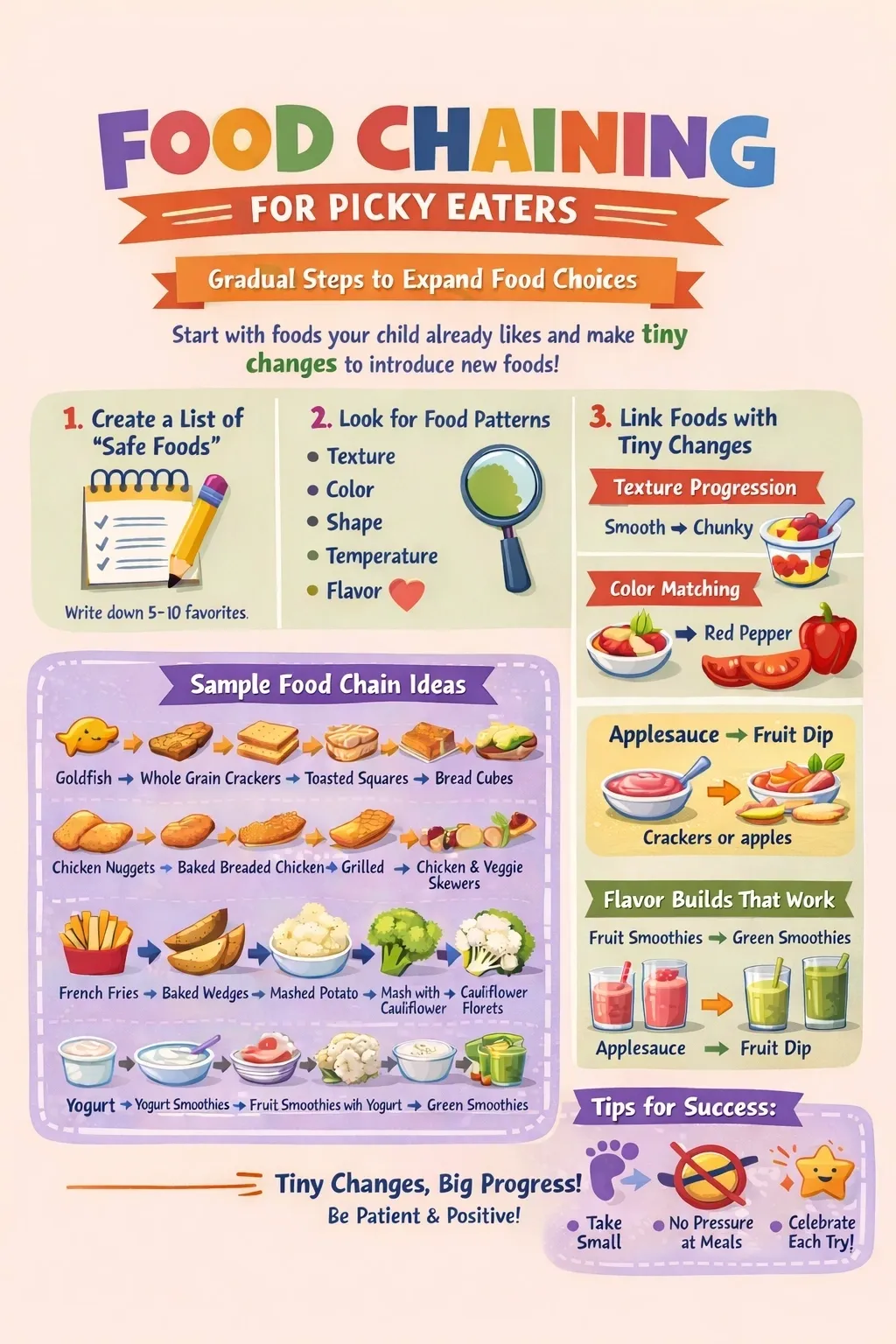
Picky eating is one of the most common nutrition challenges in toddlers and young children. For some families it is a passing phase. For others it becomes a daily stressor that limits variety, impacts growth, and leaves kids missing important nutrients.
Food chaining is the strategy I reach for most in my pediatric practice. Unlike “just one bite” pressure tactics, it is a gentle, structured approach that starts from the foods your child already accepts and builds outward, one small step at a time. This guide explains how it works, gives you ten ready-to-use chains with real store-bought brands, and covers what to do when chaining alone is not enough.
What Is Food Chaining?
Food chaining is a therapy-based feeding technique first described in the book Food Chaining by Cheri Fraker, CCC-SLP, and colleagues. It is widely used by pediatric dietitians and feeding therapists to help children accept new foods by making small, stepwise changes from their “safe” foods to new ones. Each link in the chain shares texture, flavor, or appearance with the last, so every step feels familiar instead of threatening. If you would rather not design this alone, my guided food chaining program walks families through the whole process.
Research supports the ingredients food chaining is built from: repeated low-pressure exposure, gradual transitions, and respecting a child’s sensory preferences all improve acceptance of new foods in young children.
Why Food Chaining Works
- It respects sensory preferences. Many picky eaters are sensitive to textures, smells, or appearance, and small shifts keep resistance low.
- It reduces anxiety, because every new food is clearly related to a food the child already trusts.
- It builds confidence. Each accepted step creates momentum toward the next one.
- It improves nutrition gradually, moving kids from processed favorites toward whole, nutrient-rich versions of the same food.
How to Do Food Chaining at Home: 6 Steps
- List your child’s 5 to 10 reliably accepted safe foods.
- Look for patterns in texture, flavor, color, temperature, and shape.
- Plan a chain of tiny changes from one safe food toward a goal food.
- Change one variable at a time. If you change texture, keep the flavor the same.
- Repeat exposures without pressure. It can take 10 to 15 tries before acceptance, and that is normal.
- Celebrate small wins. Touching, licking, or nibbling a new food all count as progress.
10 Food Chaining Examples Parents Can Try
These are realistic chains using store-bought brands most families can find at Target, Costco, or Whole Foods. Move to the next link only when the current one is comfortably accepted.
1. Chicken nuggets to grilled chicken
Dino Nuggets, then Applegate Naturals Nuggets, then Bell and Evans Breaded Nuggets, then Just Bare Lightly Breaded Bites, then grilled chicken bites.
2. French fries to roasted potatoes
McDonald’s fries, then Alexia frozen fries, then oven-baked potato wedges, then mashed potatoes, then Alexia sweet potato fries, then roasted potato or sweet potato cubes.
3. Plain pasta to pasta with meat sauce
Buttered pasta, then pasta with Parmesan, then Annie’s Mac and Cheese, then pasta with Rao’s marinara, then pasta with meat sauce.
4. White bread to wraps and sandwiches
White bread, then whole wheat bread, then sandwich thins, then pita bread, then whole wheat wraps with a familiar filling.
5. Goldfish crackers to seedy crackers
Goldfish, then Annie’s Cheddar Bunnies, then Ritz or Club crackers, then Crunchmaster multi-seed crackers.
6. Apple juice to fresh apples
Honest Kids apple juice, then juice diluted half with water, then GoGo SqueeZ applesauce pouch, then thin apple slices, then apple slices with peanut butter or SunButter.
7. Chips to veggies with hummus
Lay’s chips, then Sun Chips, then From the Ground Up cauliflower stalks, then Stacy’s pita chips, then Hippeas chickpea puffs, then veggie straws, then veggie straws with hummus, then baby carrots with hummus.
8. Jerky to real meat dishes
Slim Jim or Jack Link’s, then a Chomps stick, then an Epic bar, then Trader Joe’s meatballs, then mini sliders, then soft taco meat, then small steak strips.
9. Vanilla yogurt to veggie smoothies
Vanilla yogurt, then Chobani Greek yogurt, then Siggi’s fruit yogurt (dairy or non-dairy), then a berry smoothie made with yogurt, then the same smoothie with a handful of spinach blended in.
10. Pancakes to overnight oats
Pancakes with syrup, then Kodiak Cakes, then waffles with nut butter, then waffles with fruit, then oatmeal with fruit, then overnight oats with mix-ins like seeds, crushed nuts, and fruit.
What to Watch Out For
Constipation quietly sabotages more picky eaters than parents realize. A backed-up child feels full and uncomfortable, eats less, and resists new foods, so fiber, fluids, and gut-friendly foods are part of the feeding plan, not a separate project. Nutrient gaps matter too: selective eaters commonly run low on iron, zinc, vitamin D, and protein, which affect mood, sleep, and growth, and are worth checking rather than guessing. And watch for food jags: when a child eats the same food every single day, it can suddenly drop off the list. Rotate safe foods and vary brands and shapes early to protect them.
When Food Chaining Is Not Enough: Picky Eating vs ARFID
Food chaining works for typical picky eating. But if your child accepts fewer than about 20 foods, gags or panics at new foods, is losing weight or falling off their growth curve, or mealtimes involve real fear rather than preference, you may be looking at ARFID (Avoidant/Restrictive Food Intake Disorder), which needs professional feeding support rather than home strategies alone. I explain the difference in detail in my article on picky eating vs ARFID, and my ARFID support services cover what structured help looks like.
Frequently Asked Questions
How long does food chaining take?
Weeks to months, not days. Each link can take 10 to 15 relaxed exposures, and rushing the chain is the most common reason it fails. Slow is what makes it work.
What age does food chaining work for?
It is used from toddlerhood through the teen years. The steps stay the same; only the foods and the child’s involvement change. Older kids often do better when they help design their own chain.
Does food chaining work for autistic children?
Yes, it is one of the most-used approaches for expanding diet in autistic children precisely because it honors sensory sensitivity instead of fighting it. Chains usually need to move in smaller steps, and pairing it with feeding therapy helps. See my article on diet strategies for autism for the bigger picture.
What if my child refuses every new step?
Shrink the step. Refusal usually means the jump was too big, not that the method failed. Go back to the last accepted food, and change something smaller: the shape, the brand, the temperature. If refusal comes with distress, review the ARFID signs above and get support.
Key Takeaways
Food chaining is a gentle, evidence-informed way to expand a picky eater’s diet by starting from what they already accept and changing one small thing at a time. List the safe foods, find the patterns, build the chain, repeat without pressure, and celebrate every step. Mealtime stress goes down, variety goes up, and nutrition follows.
Explore related articles on the website:
- Picky Eating Causes and the Top 10 Fixes for Kids
- Picky Eating vs ARFID in Kids: Signs and Solutions
- Kids Gut Health: How Digestion Impacts Mood and Behavior
Ready for personalized support with picky eating, ARFID, or gut health? Explore my picky eating services or contact me today.
Written by Therese Nadler MS, RDN, LDN, Functional & Integrative Registered Dietitian Nutritionist (RDN)
References:
- Fraker, C., Fishbein, M., Cox, S., & Walbert, L. (2007). Food Chaining: The Proven 6-Step Plan to Stop Picky Eating, Solve Feeding Problems, and Expand Your Child’s Diet. Da Capo Press.
- Coulthard, H., & Harris, G. (2003). Early food refusal: the role of maternal mood. Journal of Reproductive and Infant Psychology / Appetite literature on early food refusal and neophobia.
- Dovey, T. M., Staples, P. A., Gibson, E. L., & Halford, J. C. (2008). Food neophobia and ‘picky/fussy’ eating in children: a review. Appetite, 50(2-3), 181-193. Link
- Taylor, C. M., Northstone, K., Wernimont, S. M., & Emmett, P. M. (2016). Picky eating in preschool children: associations with dietary fibre intakes and stool hardness. Appetite, 100, 263-271. Link
- Zhao, Y., & Yu, Y. B. (2016). Intestinal microbiota and chronic constipation. SpringerPlus, 5, 1130. Link