PCOS and Fertility: How to Improve Ovulation and Egg Quality
Key Idea Fertility is not just about hormones. It’s the result of metabolic, cellular, and environmental...
Key Idea
Fertility is not just about hormones. It’s the result of metabolic, cellular, and environmental health working together.
If You Have PCOS and Are Struggling to Get Pregnant
If you have PCOS and are struggling to conceive, the issue is often not just hormones but how your body is managing blood sugar, inflammation, and cellular energy production.
The encouraging part? These are modifiable factors.
In my work with women across Annapolis, Baltimore, and the DC area (as well as virtually nationwide), I consistently see ovulation and fertility improve when we address these root causes.
What Causes Infertility in PCOS?
PCOS-related infertility is typically driven by:
- Insulin resistance
- Elevated androgens (testosterone)
- Chronic inflammation
- Disrupted ovulation
- Poor egg quality
Most approaches stop at hormone management.
But a functional approach goes deeper.
How Insulin Resistance Affects Ovulation
Up to 70% of women with PCOS have insulin resistance.
Elevated insulin:
- Stimulates excess testosterone production
- Disrupts follicle development
- Prevents consistent ovulation
It also impacts egg quality through increased oxidative stress. This is why blood sugar control is foundational.
The Missing Link: Mitochondrial Function and Egg Quality
This is where most fertility conversations fall short.
Your eggs contain a very high number of mitochondria. These are the structures responsible for producing cellular energy (ATP).
Mitochondria are critical for:
- Egg maturation
- Chromosomal integrity
- Fertilization
- Early embryo development
When mitochondrial function is impaired, egg quality declines, even if hormones appear “normal.”
What Damages Mitochondria?
In PCOS, mitochondrial function is often affected by:
- Insulin resistance
- Chronic inflammation
- Oxidative stress
- Environmental toxins
- Poor sleep and circadian disruption
How to Optimize Mitochondrial Function (and Fertility)
Exercise: Build More and Better Mitochondria
Exercise is one of the most powerful ways to improve mitochondrial function.
- Strength training → improves insulin sensitivity
- Aerobic movement → increases mitochondrial biogenesis
Aim for:
- 3–4 strength sessions per week
- Daily walking or movement
Protein + Nutrient Density
Mitochondria rely on amino acids and micronutrients.
Focus on:
- 25–35g protein per meal
- Iron, B12, zinc-rich foods (Grass-fed beef, lamb, bison, oysters, clams/mussels, sardines, tuna, eggs – in smaller amounts but they still contribute)
Key Takeaway
If you want to support fertility, build your meals around foods that provide iron, B12, and zinc — these are the building blocks for healthy eggs and hormones.
Antioxidants: Protect Egg Quality
Antioxidants reduce oxidative stress that damages mitochondria.
This means: High intake of colorful plant foods
Examples:
- Berries (blueberries, raspberries, blackberries)
- Leafy greens
- Cruciferous vegetables (cauliflower, broccoli, kale, brussel sprouts)
- Herbs and spices
Polyphenols: Advanced Cellular Support
Polyphenols are bioactive compounds that:
- Reduce inflammation
- Improve mitochondrial efficiency
- Support insulin sensitivity
Key sources:
- Berries
- Green tea (EGCG)
- Extra virgin olive oil
- Turmeric (curcumin)
- Dark chocolate (high cacao)
- Pomegranate, grapes
Anti-Inflammatory Fats
These support hormone production and mitochondrial membranes.
Include:
- Extra virgin olive oil
- Avocado + avocado oil
- Nuts (walnuts, almonds)
- Seeds (chia, flax, hemp)
- Fatty fish (salmon, sardines, mackerel)
Reducing Toxins and Supporting Hormone Balance
Environmental toxins are an often overlooked contributor to PCOS and infertility.
Endocrine disruptors (EDCs) can:
- Mimic hormones
- Disrupt ovulation
- Reduce egg quality
Practical Ways to Reduce Exposure
Kitchen:
- Use glass or stainless steel
- Avoid heating food in plastic
Personal care:
- Choose fragrance-free products
- Reduce phthalate exposure
Food:
- Wash produce thoroughly
- Prioritize organic, especially for high-residue foods
Supporting Detox Pathways
Hormone balance depends on your ability to metabolize and eliminate hormones effectively.
Foundational support:
- Fiber (binds estrogen)
- Cruciferous vegetables (broccoli, cauliflower)
- Hydration
- Regular bowel movements
Targeted support (when appropriate):
Combinations such as:
- Vitamin C
- Alpha-lipoic acid (ALA)
- Indole-3-carbinol / DIM (e.g., Indolplex-type formulas)
May support:
- Estrogen metabolism
- Liver detoxification pathways
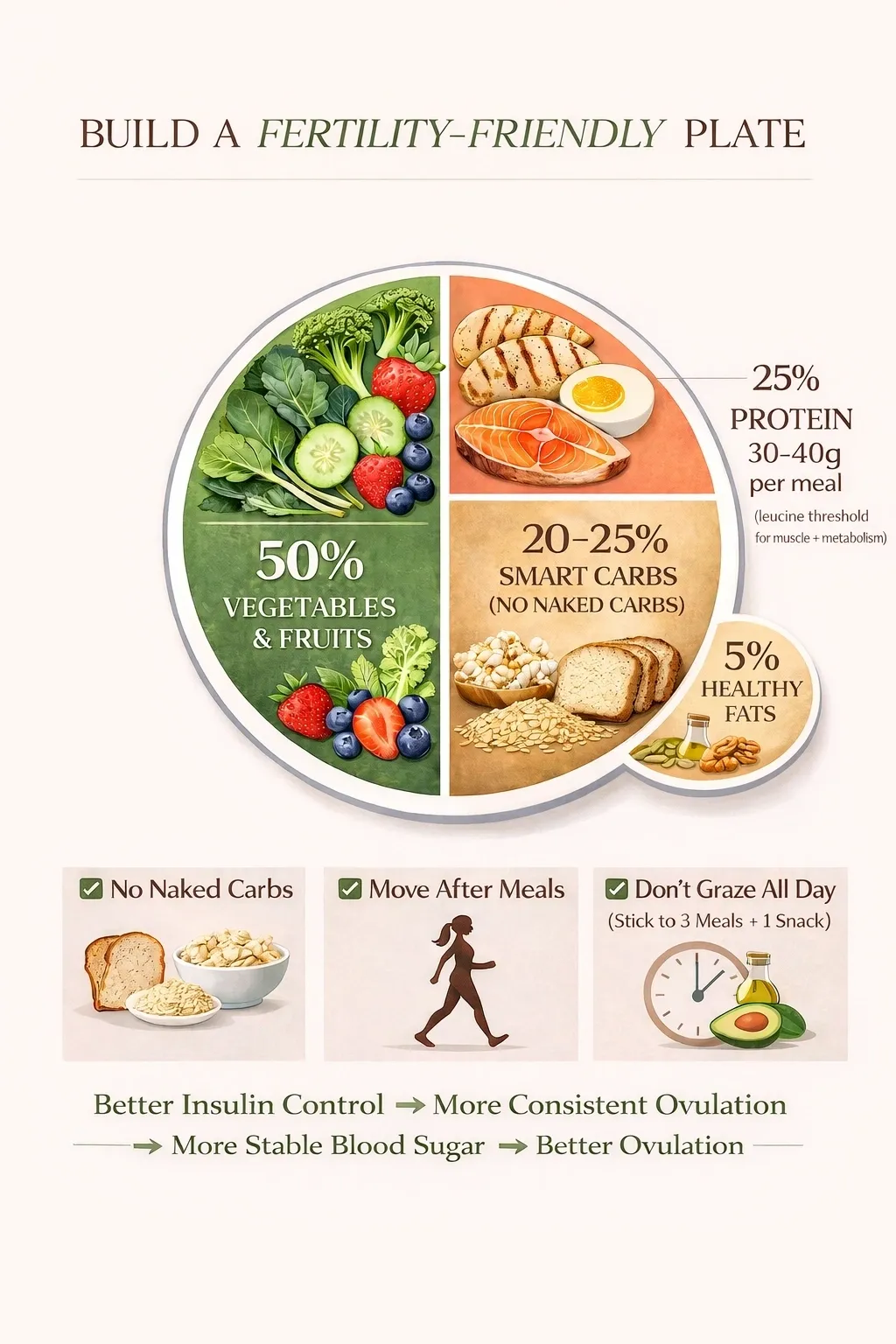
Blood Sugar Control (Non-Negotiable)
Every meal should include:
- Protein
- Fat
- Fiber
Avoid “naked carbs” always.
Stable blood sugar:
- Improves ovulation
- Reduces inflammation
- Supports egg quality
Sleep is critical for:
- Hormone regulation
- Insulin sensitivity
- Mitochondrial repair
Optimize:
- Morning light exposure
- Consistent sleep schedule
- Reduced nighttime screen use
Supplements That Support Fertility in PCOS
(Individualized, but commonly helpful)
- Inositol → improves ovulation and insulin sensitivity
- Omega-3 fatty acids → reduce inflammation
- Vitamin D → supports fertility outcomes
- NAC → improves ovulation rates
- CoQ10 → supports mitochondrial function and egg quality
Magnesium (Important Detail)
Best forms:
- Magnesium glycinate → stress + sleep
- Magnesium malate → energy production
Avoid:
- Magnesium oxide (poor absorption)
Prenatal or High-Quality Multivitamin
Yes — this is important.
A well-formulated prenatal or multivitamin provides:
- Methylated folate
- B vitamins
- Iron (if needed)
- Iodine
- Choline (critical for fetal development)
A 360° Approach to Improving Your Chances of Getting Pregnant
Fertility is not just about ovulation.
It reflects:
- Metabolic health
- Hormonal balance
- Cellular energy
- Environmental inputs
Key Takeaway
Egg quality is not fixed, but it is influenced daily by how you eat, move, sleep, and live.
When you improve:
- Blood sugar control
- Mitochondrial function
- Inflammation
- Toxin exposure
You improve your chances of conception.
FAQs
Can you get pregnant naturally with PCOS?
Yes. Many women can restore ovulation and improve fertility by addressing insulin resistance, inflammation, and lifestyle factors.
How long does it take to improve fertility with PCOS?
Improvements can begin within a few months, but meaningful changes in egg quality may take 3-6 months due to the egg development cycle.
What is the best diet for PCOS fertility?
A diet focused on protein, fiber, healthy fats, and low glycemic carbohydrates supports blood sugar control and hormone balance.
Does insulin resistance affect egg quality?
Yes. Insulin resistance increases oxidative stress and inflammation, which can negatively impact egg quality.
Explore related articles about wellness, nutrition, gut health, stress, burnout, and more.
For a plan tailored to your hormones and symptoms, learn more about hormone-supportive nutrition.
Written by Therese Nadler MS, RDN, LDN, founder/owner of Nadler Nutrition, a pediatric and women’s health nutrition practice based in Annapolis, Maryland, serving patients throughout the Washington DC and Baltimore areas, with telehealth appointments available.
- Azziz R et al. PCOS prevalence. J Clin Endocrinol Metab. 2004
- Diamanti-Kandarakis E et al. Insulin resistance. Endocr Rev. 2012
- Dunaif A. Insulin resistance in PCOS. Endocr Rev. 1997
- Palomba S et al. Lifestyle and fertility. Hum Reprod Update. 2009
- Moran LJ et al. Diet in PCOS. Hum Reprod Update. 2013
- Unfer V et al. Inositol. Gynecol Endocrinol. 2012
- Oner G et al. Omega-3 and PCOS. Eur J Obstet Gynecol. 2013
- Lerchbaum E et al. Vitamin D and fertility. Eur J Endocrinol. 2012
- Thakker D et al. NAC and PCOS. Fertil Steril. 2015
- Tilly JL, Sinclair DA. Mitochondria and oocyte quality. Science. 2013
- Wallace DC. Mitochondrial function. Science. 2012
- Gore AC et al. Endocrine disruptors. Endocr Rev. 2015
- Swan SH. Environmental exposures and fertility. Environ Health Perspect. 2008
- Calder PC. Omega-3 and inflammation. Nutrients. 2015
- Scalbert A et al. Polyphenols. Am J Clin Nutr. 2005
- Ristow M. Mitochondrial adaptation. Cell Metab. 2014