Smoothies for Picky Eaters: A Dietitian’s Build-Your-Own Formula
A dietitian’s simple formula for smoothies picky eaters will drink, with 10 recipes, protein without powder,...
A smoothie can be the one place your picky eater will accept yogurt, seeds or even spinach. It can also turn into a sugary drink that fills them up before dinner. The difference is in how you build it. This guide gives you a simple formula for smoothies for picky eaters, 10 starter recipes, ways to add protein without powder, and fixes for the texture complaints every parent hears.
Written by Therese Nadler MS, RDN, LDN, a registered dietitian who works with families of picky eaters. Medically reviewed on September 23, 2026.
Table of Contents
Why Smoothies Work for Picky Eaters (and When They Backfire)
Smoothies work because they are predictable. Once a child trusts a flavor and color, you can change one small ingredient at a time without changing the whole experience. They are also easy to drink when appetite is low, and they let a child try new foods in a familiar form.
They backfire when they become mostly fruit and juice, when they replace meals every day, or when they are used to hide foods a child then discovers. Keep smoothies as one part of the day, next to real meals and snacks, and they help picky eaters rather than hold them back.
The Build-Your-Own Smoothie Formula
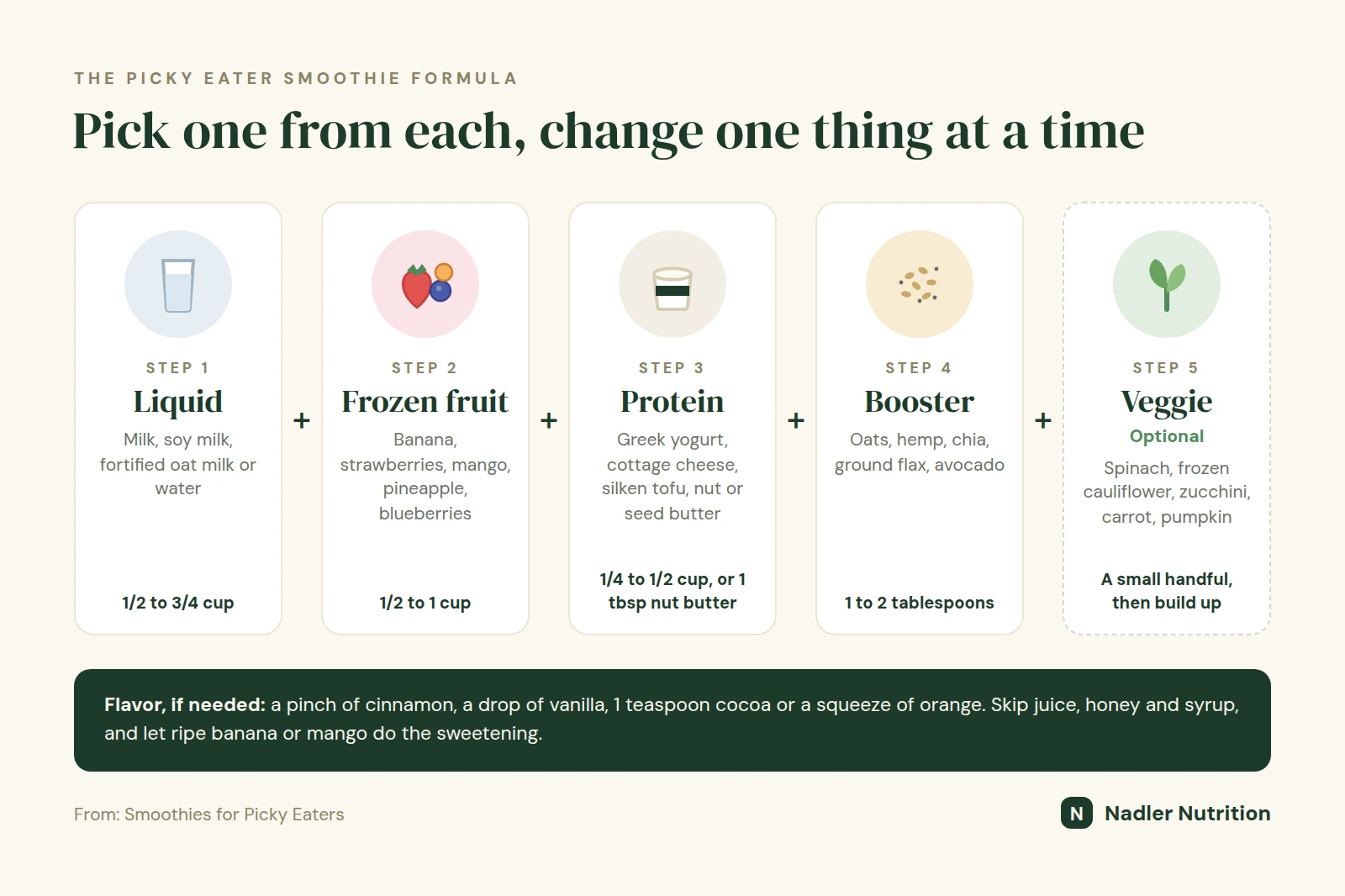
Pick one item from each row. This makes one large or two small kid-size smoothies. Keep everything the same except one ingredient when you want to try something new.
| Step | Pick one | Amount (about) |
|---|---|---|
| 1. Liquid | Milk, soy milk, fortified oat milk, or water | 1/2 to 3/4 cup |
| 2. Frozen fruit | Banana, strawberries, mango, pineapple, blueberries, peaches | 1/2 to 1 cup |
| 3. Protein | Greek yogurt, cottage cheese, silken tofu, peanut or seed butter | 1/4 to 1/2 cup yogurt or tofu, or 1 tablespoon nut or seed butter |
| 4. Booster | Oats, hemp seeds, chia seeds, ground flax, avocado, fortified cereal | 1 to 2 tablespoons (or 1/4 avocado) |
| 5. Optional veggie | Spinach, frozen cauliflower, zucchini, carrot, sweet potato, pumpkin | A small handful, then build up |
| 6. Flavor | Vanilla, cinnamon, cocoa powder, a squeeze of orange | A pinch or 1 teaspoon |
People sometimes ask about the “rule of 3” for smoothies. It is not an official rule, but it usually means keeping a smoothie to about three main ingredients so the flavor stays simple. That is good advice for picky eaters: a base, a fruit and one protein are enough to start. Add boosters and vegetables later, once the basic version is a safe food.
10 Smoothie Recipes for Picky Eaters (Start Simple)
These smoothie recipes for picky eaters move from easiest to more adventurous. Each one uses the formula above, so you can swap ingredients freely.
Easy smoothies for picky eaters
- Strawberry banana: milk, frozen strawberries, half a banana, Greek yogurt. The classic starter.
- Chocolate peanut butter “milkshake”: milk, frozen banana, 1 tablespoon peanut or sunflower seed butter, 1 teaspoon cocoa powder.
- Orange creamsicle: milk or yogurt, frozen mango, a squeeze of fresh orange, a drop of vanilla.
Fruit smoothie recipes for picky eaters with a protein boost
- Blueberry oat: milk, blueberries, 2 tablespoons oats, Greek yogurt. Good as part of breakfast.
- Tropical: soy milk, pineapple, mango, silken tofu, a few hemp seeds.
- Iron booster: milk, strawberries, a small handful of fortified cereal and a spoon of seed butter. The fruit’s vitamin C helps the body use the iron.
Vegetable smoothies for picky eaters
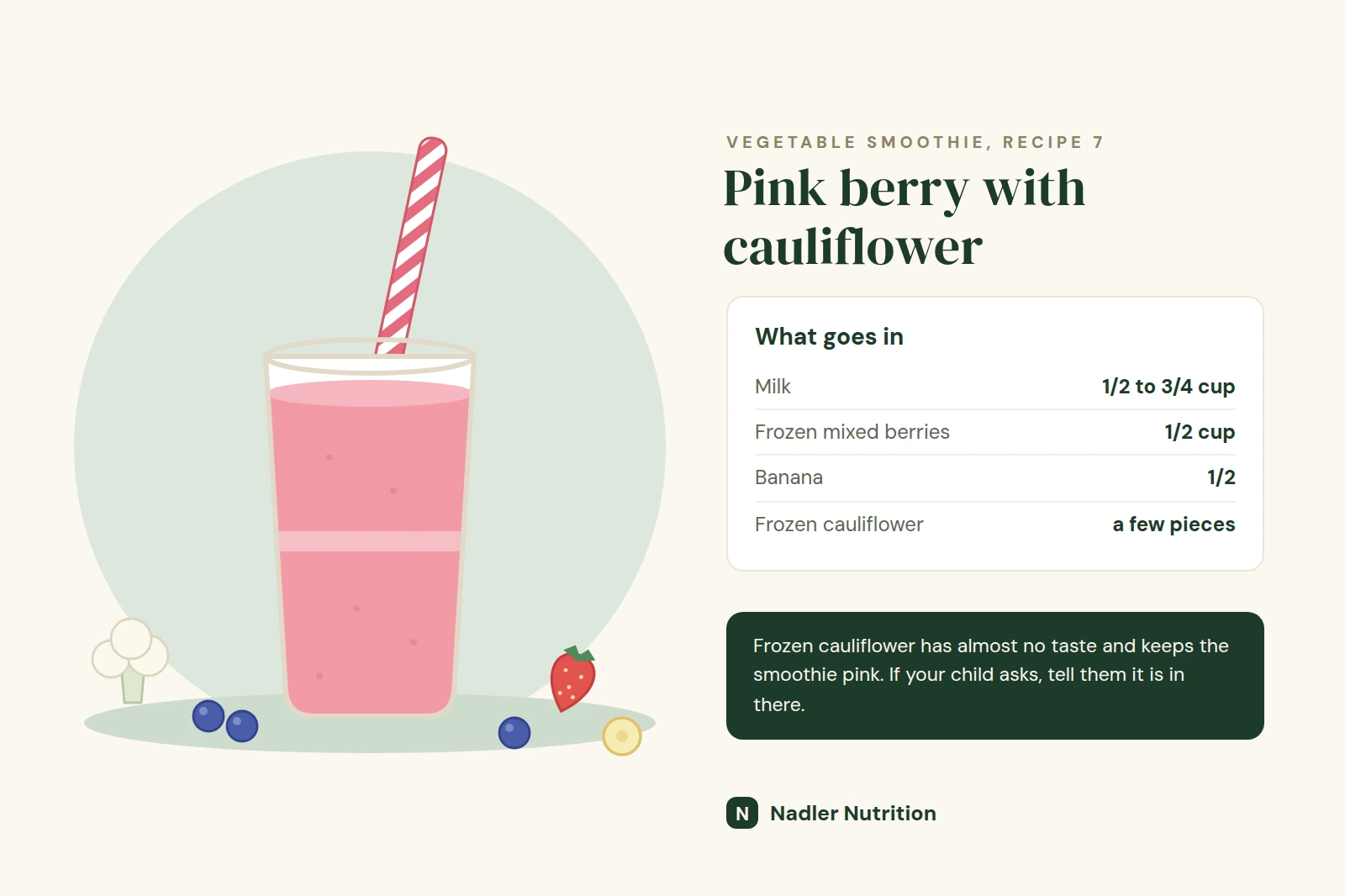
- Pink berry with cauliflower: mixed berries, banana, milk and a few pieces of frozen cauliflower, which has almost no taste.
- Carrot mango sunshine: mango, orange, a few baby carrots or 2 tablespoons carrot puree, yogurt.
- Pumpkin pie: canned pumpkin, frozen banana, milk, cinnamon.
- Green “superhero” smoothie: pineapple, banana, milk and a small handful of baby spinach. Serve in a dark or opaque cup the first few times if green is a barrier.
Smoothie bowls for picky eaters
Some kids who refuse drinks will eat the same thing with a spoon. Make any recipe above thicker, pour it into a bowl, and let your child add toppings: banana coins, granola, berries or a sprinkle of seeds. Smoothie bowls for picky eaters also give kids control, which often makes them more willing to try.
How to Add Protein Without Protein Powder
Protein smoothies for picky eaters do not need powder. Food sources work well and bring other nutrients with them:
- Greek yogurt: thick and creamy, and it hides well in fruit.
- Milk or soy milk: more protein than most other plant milks.
- Silken tofu: blends completely smooth with no taste.
- Cottage cheese: blend it well first for texture-sensitive kids.
- Peanut butter, almond butter or sunflower seed butter.
- Hemp seeds and chia seeds (see the benefits of seeds).
What about protein shakes for picky eaters? Most protein powders are made for adults, and they are dietary supplements, which the FDA does not approve before they are sold (FDA). If your child is underweight or eats very little protein, ask your pediatrician or a pediatric dietitian before using a shake or powder. Our picky eating support can help you work out whether your child needs one.
Adding Vegetables: Hide Them or Be Honest?
A hidden veggie smoothie can add nutrients, but secret ingredients can backfire. If a child finds out, they may stop trusting the smoothie and the person who made it. A better approach is to be matter of fact: “This one has cauliflower in it, it tastes like strawberries.” You do not need to announce it, but do not deny it if asked.
This fits the division of responsibility in feeding: you decide what goes in the cup, and your child decides whether and how much to drink. The mildest vegetables to start with are frozen cauliflower, zucchini, baby spinach, carrot, sweet potato and pumpkin. Watch the color: spinach with blueberries turns brown, which many kids reject. Keep green smoothies with yellow fruit, and pink ones with red and purple fruit.
Keep Sugar in Check: Juice and Added Sugar Limits
Healthy smoothies for picky eaters use whole fruit, not juice or sweeteners. Here is what the main guidelines say:
- The AAP recommends no juice before 12 months and no more than 4 to 6 ounces of 100% juice a day for ages 1 to 6, and prefers whole fruit (AAP).
- The Dietary Guidelines for Americans advise avoiding added sugars for young children.
- The American Heart Association recommends that children 2 and older have no more than 25 grams (about 6 teaspoons) of added sugar a day, and none before age 2 (AHA).
In practice: use frozen fruit instead of juice, skip honey and syrup, and let ripe banana or mango do the sweetening. Never give honey to babies under 12 months. Serve smoothies in a small cup with a meal or snack, not as a drink to sip all day.
Texture Troubleshooting for Sensory-Sensitive Kids
Most smoothie refusals are about texture, temperature or color, not taste. Try these fixes:
| Complaint | Try this |
|---|---|
| Too thick | Add liquid a tablespoon at a time, or use less frozen fruit. |
| Too thin or watery | Add frozen banana, yogurt or a few ice cubes. |
| Bits or seeds | Blend longer, use seedless fruit, and grind seeds or oats first. |
| Too cold | Use half fresh and half frozen fruit, or let it sit a few minutes. |
| Foamy | Let it rest for a minute, then stir. |
| Wrong color | Use an opaque cup with a lid and straw. |
| “Tastes different” | Change only one ingredient at a time, and keep the same cup. |
Allergy-Friendly Smoothie Swaps
- Dairy-free: use soy milk or a fortified plant milk, and swap yogurt for silken tofu or a dairy-free yogurt with added calcium.
- Nut-free: use sunflower seed butter or hemp seeds instead of nut butters.
- Banana-free: use avocado, mango, frozen cauliflower or cooked sweet potato for creaminess.
- Egg-free and gluten-free: the formula is already free of both if you choose certified gluten-free oats.
Some plant milks are low in protein, so check the label. The AAP’s drink guidance for young children is a helpful reference if your child cannot drink cow’s milk.
How to Introduce a New Smoothie
- Start with a flavor your child already likes, such as a store-bought yogurt drink, and make a close homemade copy.
- Serve a small taste in a tiny cup, next to the meal, with no pressure to finish.
- Let your child add ingredients and press the blender button.
- Change one thing at a time, like a few more berries or a spoon of oats. This is food chaining in action.
- Offer the new version again on other days. The CDC notes that children may need many tries before accepting a new food.
When Smoothies Are Covering a Bigger Problem
Smoothies are a tool, not a meal plan. Talk to your pediatrician or a pediatric dietitian if your child drinks smoothies instead of most meals, the list of accepted foods is getting shorter, your child is losing weight or growing slowly, or they gag and panic around solid foods. These can be signs of ARFID. Our guide to picky eating vs ARFID explains the difference, and our ARFID support page shows what treatment looks like.
For children with ADHD, some families find that stimulant medication shrinks appetite at lunch. A smoothie in the morning or after school can be an easier way to get protein and calories in. See our ADHD nutrition page for more.
The Bottom Line
The best smoothies for picky eaters are simple, predictable and built on whole foods: a liquid, frozen fruit, a protein, and a booster or vegetable once the basic version is trusted. Keep juice and added sugar low, change one ingredient at a time, and serve smoothies alongside meals rather than instead of them.
Want more ideas? Try our picky eater breakfast ideas and picky eater dinner ideas. If mealtimes feel like a battle, book a free consultation and we will build a plan around your child’s safe foods.
Smoothies and Picky Eaters: FAQs
What is the rule of 3 for smoothies?
There is no official rule. It usually means keeping a smoothie to about three main ingredients, such as milk, one fruit and yogurt. For picky eaters, a simple three-ingredient smoothie is the best place to start.
How do I make a smoothie for a picky eater?
Use the formula: a liquid, frozen fruit, a protein such as yogurt or seed butter, and an optional booster. Start with a flavor your child already likes and change only one ingredient at a time.
What smoothie can I make for a kid who doesn’t like fruit?
Try a chocolate peanut butter smoothie with milk, cocoa and a small amount of banana, or a pumpkin pie smoothie with pumpkin, milk and cinnamon. Both taste more like dessert than fruit.
Can a smoothie replace a meal for a picky eater?
Now and then, yes, if it includes protein, fat and fiber. Relying on smoothies for most meals is a sign to talk to your pediatrician or a pediatric dietitian.
Are protein shakes safe for picky eaters?
Most protein powders are made for adults and are not approved by the FDA. Use food sources like yogurt, milk, tofu and seed butter first, and ask your pediatrician before giving a shake or powder.
Can toddlers drink smoothies?
Yes. Serve a small portion in an open or straw cup with a meal or snack. Avoid added sugar, grind seeds and nuts smooth, and never add honey for babies under 12 months.
How much juice can kids have?
The AAP recommends no juice before 12 months and no more than 4 to 6 ounces of 100% juice a day for ages 1 to 6. In smoothies, frozen whole fruit is the better choice.
Can I make smoothies ahead of time?
Yes. Store a smoothie in a sealed jar in the fridge and shake before serving, or freeze leftovers in popsicle molds. Frozen smoothie pops are a good way to offer a familiar flavor in a new form.
Are smoothies good for kids with ADHD?
They can help, especially if medication reduces appetite. A smoothie with protein and healthy fat is an easy way to get nutrients in at times when your child is hungry.
Explore related articles on the website:
- Picky Eater Breakfast Ideas: 30+ Easy, No-Pressure Options
- Food Chaining for Picky Eaters: Step-by-Step Ladder
- 40 Picky Eater Dinner Ideas Kids Will Actually Eat
Written by Therese Nadler MS, RDN, LDN, Functional & Integrative Registered Dietitian Nutritionist (RDN)
This article is for educational purposes only and is not medical advice or a substitute for individualized care. Every child is different; for concerns about your child’s growth, nutrition, or eating, consult your pediatrician or a registered dietitian.
References:
- American Academy of Pediatrics, HealthyChildren.org. Where We Stand: Fruit Juice for Children. Link
- U.S. Departments of Agriculture and Health and Human Services. Dietary Guidelines for Americans. Link
- American Heart Association. Added Sugars and Cardiovascular Disease Risk in Children. Link
- American Academy of Pediatrics, HealthyChildren.org. Recommended Drinks for Children Age 5 and Younger. Link
- Centers for Disease Control and Prevention. Tips to Help Your Picky Eater. Link
- Ellyn Satter Institute. The Division of Responsibility in Feeding. Link
- U.S. Food and Drug Administration. Information for Consumers on Using Dietary Supplements. Link